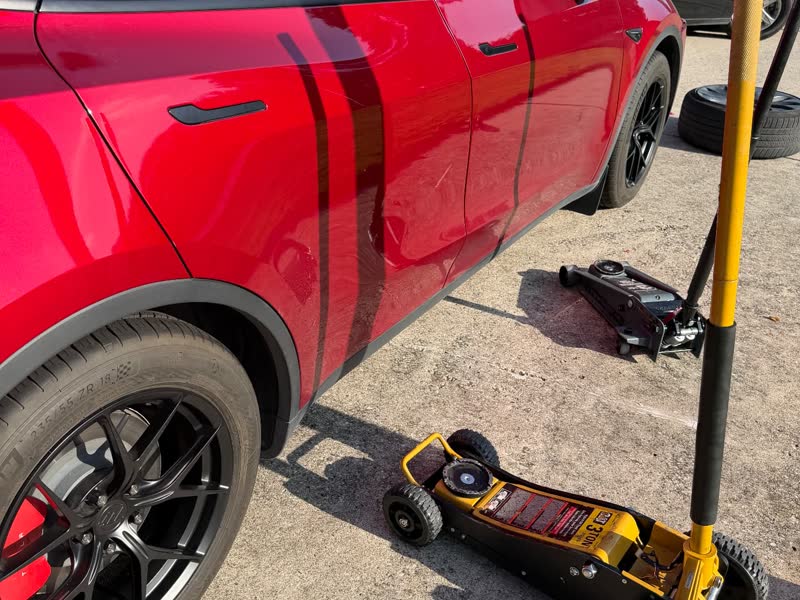
Why studs snap on electric vehicles
Over-torque is the leading cause and it is almost always historical — a tire shop's impact gun applied fifty percent past spec, months or years before the stud finally failed. Steel has a fatigue limit; a stud stretched past yield is living on borrowed time and it usually breaks during the next removal, which is why the failure so often happens to the person trying to help.
Corrosion is second. North Texas doesn't salt often, but when an ice event hits, brine goes down heavily, and it collects at the thread interface. A corroded stud loses cross-section, and when a breaker bar loads it, it shears.
Third is heat cycling combined with EV weight. Higher torque specs, heavier vehicles, and regenerative braking that changes the thermal pattern at the hub all add stress the stud sees over its life.