Owners searching for Tesla service in Dallas are usually in one of two very different situations, and the split matters because it decides whether you wait days or minutes. The first is a repair — a suspension component, a drive unit, a high-voltage pack fault, body work. That belongs at a Tesla service center, and no roadside company should pretend otherwise. The second is a stoppage: the car will not move, will not open, or is unsafe to drive right now. That is roadside work, and it is close to everything we do.
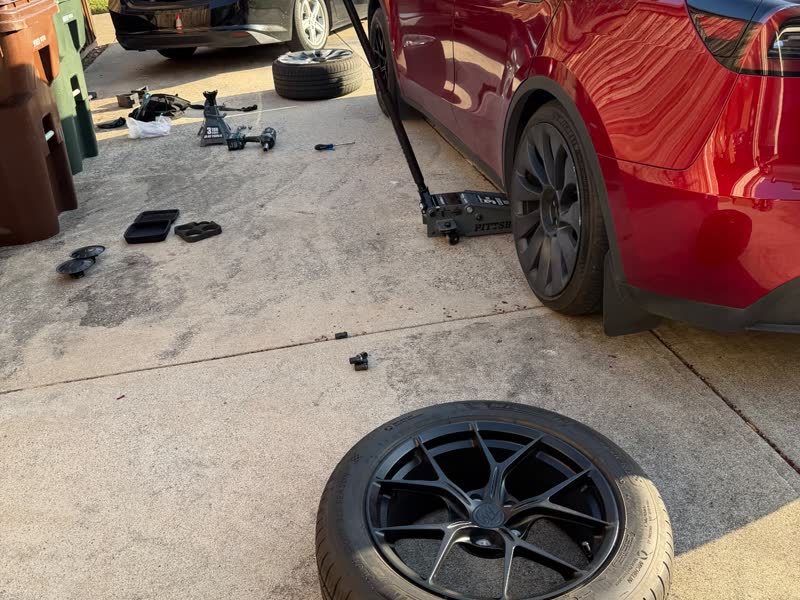
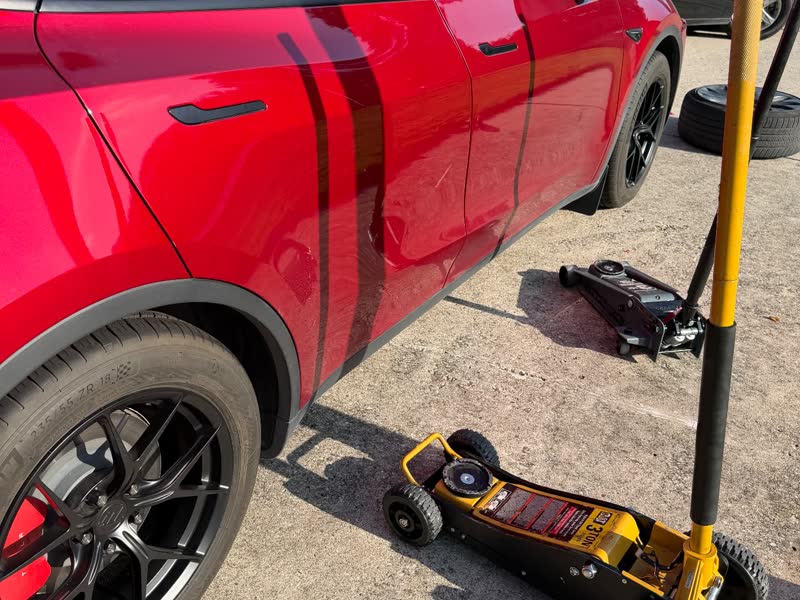
The overwhelming majority of Tesla emergency calls across the metroplex fall into four buckets. A flat tire on a car that shipped with no spare and no jack. A 12V battery flat enough that the screen is black and the handles will not present. A lockout from a dead phone key, an unpaired key card, or that same flat 12V. And a wheel that will not come off because of a locking lug or a seized nut. All four are fixable in the spot the car is sitting, usually inside an hour of the call.
The practical difference is what happens to your week. A Tesla service center appointment for a flat means arranging transport, surrendering the car, and waiting for a slot. A roadside call means a technician arrives with model-specific jack pucks and a loaner wheel in your fitment, sets every lug to Tesla's 129 lb-ft figure, and you drive away. When we test and the answer genuinely points to the service center, you get that diagnosis in writing and we prepare the car properly for transport instead of letting a general operator drag a locked drive unit onto a bed.